
Hover to zoom · click to enlarge
| Composition | Ashwagandha capsule |
|---|---|
| Packing | 30 CAPSULE |
| SHELF LIFE | 24 MONTHS |
| HSN CODE | 3004 |
| Category | Capsules |
| Supply | Wholesale & Export |
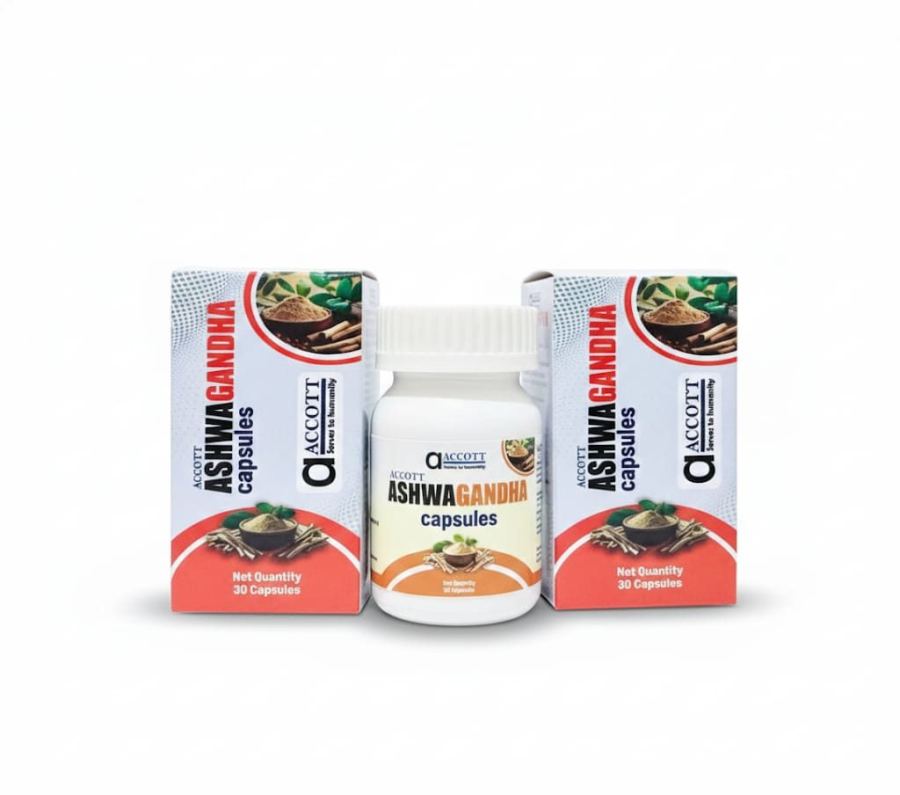
The product shown is ACCOTT Ashwagandha Capsules, an herbal supplement containing ashwagandha (Withania somnifera), a plant traditionally used in Ayurvedic medicine.
|
Feature
|
Description
|
| --- | --- |
|
Brand
|
ACCOTT
|
|
Product
|
Ashwagandha Capsules
|
|
Form
|
Oral capsules
|
|
Pack size
|
30 capsules per pack
|
|
Category
|
Herbal dietary supplement
|
|
Main ingredient
|
Ashwagandha, subject to label confirmation
|
|
Traditional use
|
Stress management, relaxation and general well-being
|
The image shows one white plastic bottle with a ribbed screw cap, positioned between two rectangular product cartons. The cartons feature red, black and white lettering, botanical imagery, and an illustration of ashwagandha powder and roots.
Ashwagandha is an adaptogenic herb, a term used for plants traditionally believed to help the body respond to stress.
Stress and anxiety: Some clinical studies suggest that certain ashwagandha extracts may reduce perceived stress and anxiety symptoms.
Sleep: Some evidence suggests modest improvements in sleep quality and sleep duration.
Physical performance: Preliminary research suggests possible benefits for strength, endurance and recovery, although evidence remains limited.
Concentration and memory: Early studies have investigated cognitive benefits, but results are insufficient to establish effectiveness.
General well-being: It is traditionally used for vitality, although many traditional claims have not been established through high-quality clinical trials.
Importantly, results from studies of specific standardized extracts cannot automatically be applied to every ashwagandha product.
The photograph does not show the amount of ashwagandha per capsule or the manufacturer's dosage instructions. These are important because ordinary root powder and concentrated extracts can have substantially different strengths.
Clinical studies have investigated various extracts, sometimes at 250–600 mg daily, but this is not a dosage recommendation for ACCOTT capsules. Follow the verified product label and consult a healthcare professional if necessary.
Consumer
+1
Important safety information
Common possible side effects include nausea, stomach discomfort, diarrhea and drowsiness. Rare cases of liver injury have also been reported.
Avoid ashwagandha during pregnancy and breastfeeding. Seek medical advice before using it if you have thyroid disease, an autoimmune disorder, liver disease or an upcoming operation. It may interact with sedatives, thyroid medication and medicines for blood pressure, diabetes and immune suppression.
NCCIH
+1
|
Element
|
Visible details
|
| --- | --- |
|
Cartons
|
Two upright boxes with a light blue and white background
|
|
Bottle
|
White plastic container with a wide, ribbed white cap
|
|
Branding
|
ACCOTT logo on both cartons and the bottle
|
|
Product name
|
ASHWAGANDHA in prominent black and red text
|
|
Illustrations
|
Herbal powder, roots and green leaves
|
|
Quantity
|
30 capsules printed on each carton
|
|
Design
|
Red curved accents, orange bottle label and botanical illustrations
|
The product's manufacturing date, expiry date, ingredient concentration, manufacturer address, batch number and regulatory registration cannot be verified from this front-facing image.
Check the back label for the amount of ashwagandha per capsule, whether it contains root powder or a standardized extract, the percentage of withanolides, other ingredients, recommended serving size, expiry date and quality-testing information.
The product's exact formulation and effectiveness cannot be established from its packaging alone. For further independent information, see the
NIH guide to ashwagandha's benefits and safety
.
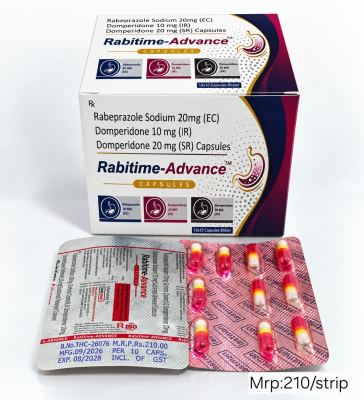
RABEPRAZOLE SODIUM 20MG (EC) DOMERIDONE 10MG (IR) DOMPERIDONE 20MG (SR) CAP
10*10BLISTER