
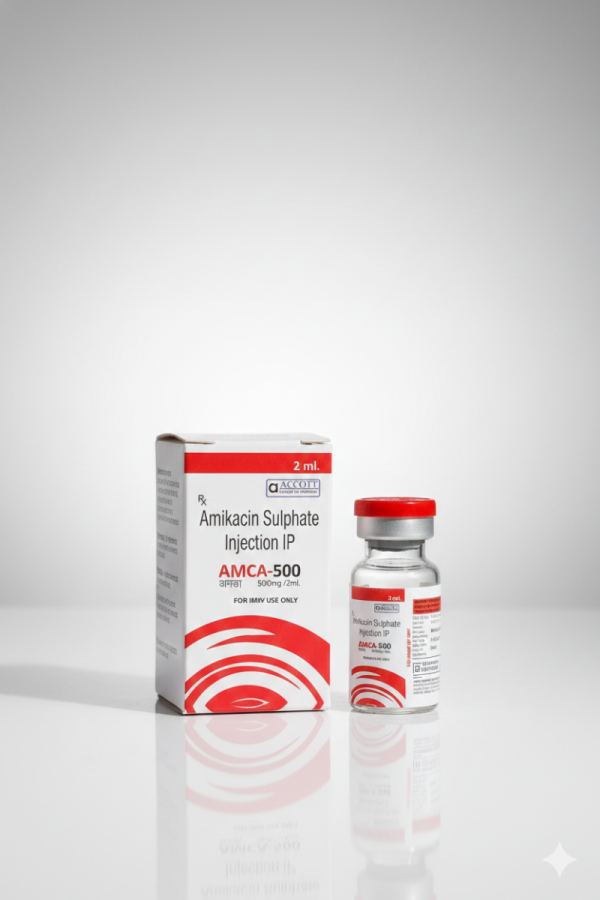
Hover to zoom · click to enlarge
| Composition | Amikacin Sulphate Injection IP |
|---|---|
| Packing | 2ML |
| SHELF LIFE | 24 MONTHS |
| HSN CODE | 3004 |
| Category | Injections |
| Supply | Wholesale & Export |
AMCA-500 INJECTION
| Item | Details visible in the image |
|---|---|
| Brand | AMCA-500 |
| Generic name | Amikacin Sulphate Injection I.P. |
| Strength | 500 mg / 2 mL |
| Volume | 2 mL |
| Route | The box explicitly says “FOR IM/IV USE ONLY” |
| Medicine class | Aminoglycoside antibiotic |
| Prescription | Rx medicine |
| Manufacturer/brand mark | ACCOTT is visible on the box and vial |
| Dosage form | Injectable solution in a vial |
Amikacin is a powerful antibacterial antibiotic used primarily for serious bacterial infections, particularly infections caused by susceptible Gram-negative bacteria. It works by interfering with bacterial protein production, ultimately preventing the bacteria from growing/surviving.
It is not a painkiller or fever-reducing injection, and it should not be used for ordinary viral infections.
Amikacin belongs to the aminoglycoside group, which has two important potential toxicities:
1. Kidney toxicity (nephrotoxicity)
Amikacin is eliminated through the kidneys. Kidney function therefore needs to be considered when determining the dose. Monitoring of serum creatinine/renal function is recommended, particularly with prolonged treatment or in people with impaired kidney function. DailyMed
2. Hearing/balance toxicity (ototoxicity)
It can cause ringing in the ears, dizziness/vertigo, balance problems, or hearing loss. Some hearing damage can be permanent. The risk increases with higher exposure, prolonged treatment, and impaired kidney function. WHO Extranet
The 500 mg printed on this package is the amount contained in the 2 mL vial, not necessarily the dose that a particular patient should receive.
Amikacin dosing is generally calculated using body weight and kidney function, and the dosing interval may need adjustment when kidney function is reduced. The prescribing information gives, for patients with normal renal function, a typical total daily dose of 15 mg/kg/day, divided into doses; however, the appropriate regimen depends heavily on the infection and patient. DailyMed
Do not use the 500 mg vial as an instruction to administer the entire vial.
Extra caution is needed if the person is receiving other medicines that can affect the kidneys or hearing, including some other aminoglycoside antibiotics, vancomycin, colistin/polymyxins, amphotericin B, cisplatin, and certain diuretics. DailyMed
Also tell the treating clinician if there is:
The previous image was Cefcum-S 375 (ceftriaxone + sulbactam), whereas this one is AMCA-500 (amikacin).
They are different classes of antibiotics and are sometimes prescribed together for particular serious bacterial infections, but whether they should be combined depends on the specific infection, cultures/susceptibility results, kidney function, and the clinician's treatment plan. Importantly, amikacin has substantially more concern regarding kidney and hearing toxicity, so it isn't an injection to self-administer simply because another antibiotic was prescribed. DailyMed
If you tell me the patient's age, weight, diagnosis/infection, and what other medicines were prescribed, I can explain why these two injections might have been prescribed together and what the usual monitoring would be.