
Hover to zoom · click to enlarge
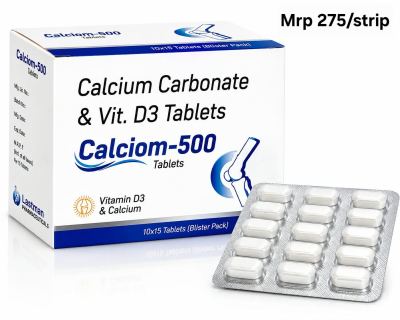
| Composition | Calcium Carbonate & Vitamin D3 Tablets. |
|---|---|
| Packing | 10*15(BLISTER SLIVER PVC) |
| SHELF LIFE | 24 MONTHS |
| HSN CODE | 3004 |
| Category | Tablets |
| Supply | Wholesale & Export |
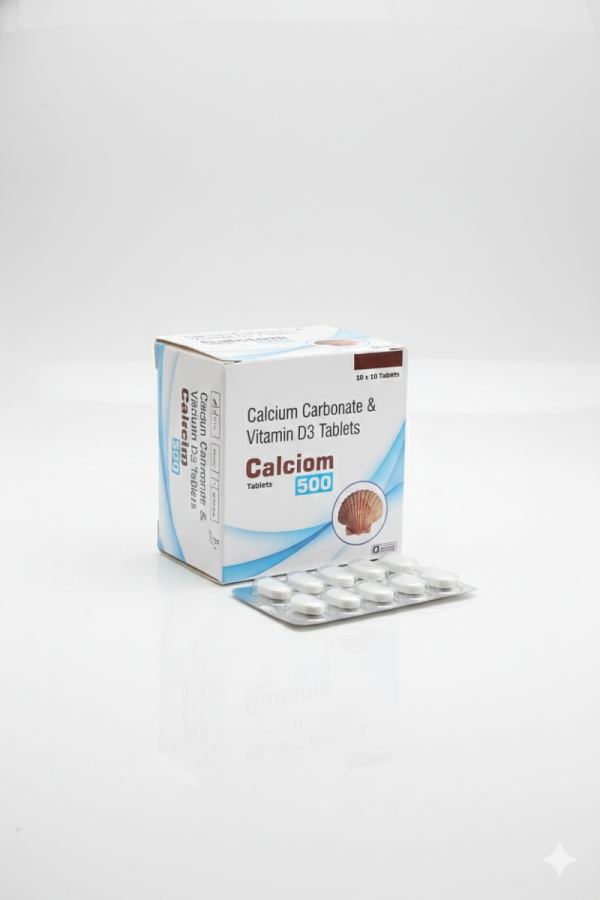
Calciom 500 Tablets. The front of the pack states “Calcium Carbonate & Vitamin D3 Tablets.” It is a calcium + vitamin D supplement, used primarily to prevent or treat calcium/vitamin-D deficiency and to support bones and teeth.
From the packaging, the active ingredients are:
The “500” on the front indicates the marketed calcium strength, but the photograph does not make the exact composition panel sufficiently readable to safely state whether the label means 500 mg elemental calcium or 500 mg calcium carbonate. These are not the same thing.
Important: Calcium carbonate contains approximately 40% elemental calcium by weight. Thus, 500 mg calcium carbonate provides about 200 mg elemental calcium. If the label instead says “equivalent to elemental calcium 500 mg,” that is a substantially different dose.
1. Calcium carbonateCalcium carbonate (CaCO₃) is a common calcium salt used in supplements.
Calcium is essential for:
Bone and tooth formation
Maintaining bone strength
Muscle contraction
Normal nerve transmission
Normal heartbeat
Blood clotting
Various cellular processes
The body stores approximately 99% of its calcium in bones and teeth, where it forms part of the mineral structure that provides strength.
A person may need additional calcium when dietary intake is inadequate, for example with:
Low dietary calcium intake
Increased nutritional requirements
Certain stages of life
Osteoporosis/osteopenia management when advised by a clinician
Vitamin-D deficiency-associated bone problems
Certain conditions that interfere with calcium absorption
However, more calcium is not necessarily better. Excessive supplementation can cause problems, including kidney stones in susceptible individuals.
2. Vitamin D3The second active ingredient is Vitamin D3 (cholecalciferol).
Vitamin D has an important role in calcium metabolism.
In simplified terms:
Vitamin D3 → improves intestinal calcium absorption → supports calcium availability → supports bone mineralization
Without sufficient vitamin D, the body cannot efficiently maintain normal calcium absorption.
Vitamin D is therefore particularly important when calcium supplementation is being used to support bone health.
Why are calcium + vitamin D3 combined?The combination makes physiological sense because the two nutrients work together.
Provides the mineral needed for bone structure.
Helps the body absorb and utilize calcium.
So the overall purpose is:
Calcium + Vitamin D3 → adequate calcium availability → bone and muscle support
UsesCalcium + vitamin D preparations may be recommended for:
When dietary calcium intake isn't sufficient.
Especially when vitamin D supplementation is required alongside calcium.
Calcium and vitamin D are important components of osteoporosis management, although they do not replace prescription osteoporosis medicines when those are indicated.
They help maintain normal bone mineralization and strength.
Supplementation may sometimes be recommended during periods when calcium/vitamin-D requirements are increased.
How calcium carbonate is absorbedCalcium carbonate is absorbed best when taken with food, because stomach acid helps dissolve it.
This differs from some other calcium salts, such as calcium citrate, which can be absorbed with or without food.
If your doctor/pharmacist has given specific instructions for this particular product, follow those instructions.
Common side effectsCalcium carbonate can cause:
Constipation
Bloating
Gas
Abdominal discomfort
Nausea
Taking excessive amounts can cause high blood calcium (hypercalcemia).
Possible symptoms of excessive calcium include:
Nausea/vomiting
Constipation
Excessive thirst
Frequent urination
Abdominal discomfort
Weakness
Confusion in severe cases
People who have a history of kidney stones should discuss calcium supplementation with their doctor.
Calcium obtained from food is generally handled differently from excessive supplemental calcium, and the overall amount and timing of supplementation matter.
Don't take additional calcium supplements on top of this product unless you have been advised to do so.
Important medicine interactionsCalcium can interfere with absorption of several medicines.
This is particularly important with:
Levothyroxine can have reduced absorption if taken together with calcium.
Calcium can reduce absorption of some antibiotics, particularly:
Tetracyclines
Fluoroquinolones
This is particularly relevant given the Cefott-O (ofloxacin) you showed earlier. Ofloxacin is a fluoroquinolone, and calcium/mineral supplements can interfere with absorption of this class.
Therefore, don't take calcium at the same time as ofloxacin; the appropriate separation depends on the specific antibiotic instructions. Follow the prescribing pharmacist/doctor's timing instructions.
Calcium can also interfere with iron absorption, so they are often separated.
A very important point regarding the medicines you showed earlierYou previously showed Cefott-O, which contains:
Cefixime 200 mg + Ofloxacin 200 mg
You now have Calciom 500, containing calcium + vitamin D3.
If both were prescribed for the same person, the timing matters because calcium can interfere with absorption of ofloxacin.
This is different from Cefott-100/Cefott-200, which contain cefixime and do not have the same fluoroquinolone-calcium interaction.
Calcium carbonate vs elemental calciumThis is one of the most commonly misunderstood parts of calcium supplements.
For example:
500 mg calcium carbonate ≠ 500 mg elemental calcium.
Calcium carbonate is approximately 40% elemental calcium.
Therefore:
500 mg calcium carbonate ≈ 200 mg elemental calcium
But if a product label specifically says:
“Calcium equivalent to 500 mg elemental calcium”
then the tablet provides 500 mg actual calcium, requiring considerably more calcium carbonate.
So to give you the exact calcium dose in this particular Calciom 500, I would need to see the composition panel on the back of the box or strip.
Do not take all of these simply because they are available. In particular, the different Cefott products contain overlapping antibiotics, and Cefott-O + a calcium supplement requires attention to dosing timing because of ofloxacin.
If you upload a clear photo of the back of the Calciom 500 box/strip, I can read the exact calcium (elemental) amount, vitamin D3 IU/µg, excipients, recommended dose and manufacturer instructions from the label.
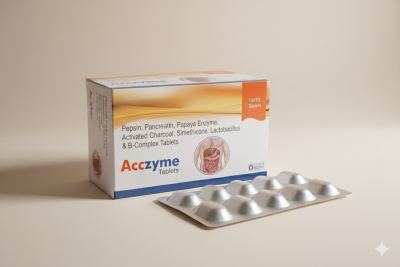
Pepsin, Pancreatin, Papaya Enzyme, Activated Charcoal, Simethicone, Lactobacillus & B-Complex Suspension IP
10*10ALU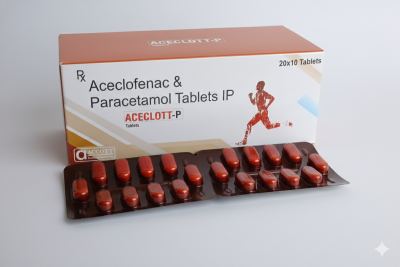
Aceclofenac & Paracetamol Suspension IP
20*10 (BLISTER) AMBER PVC