
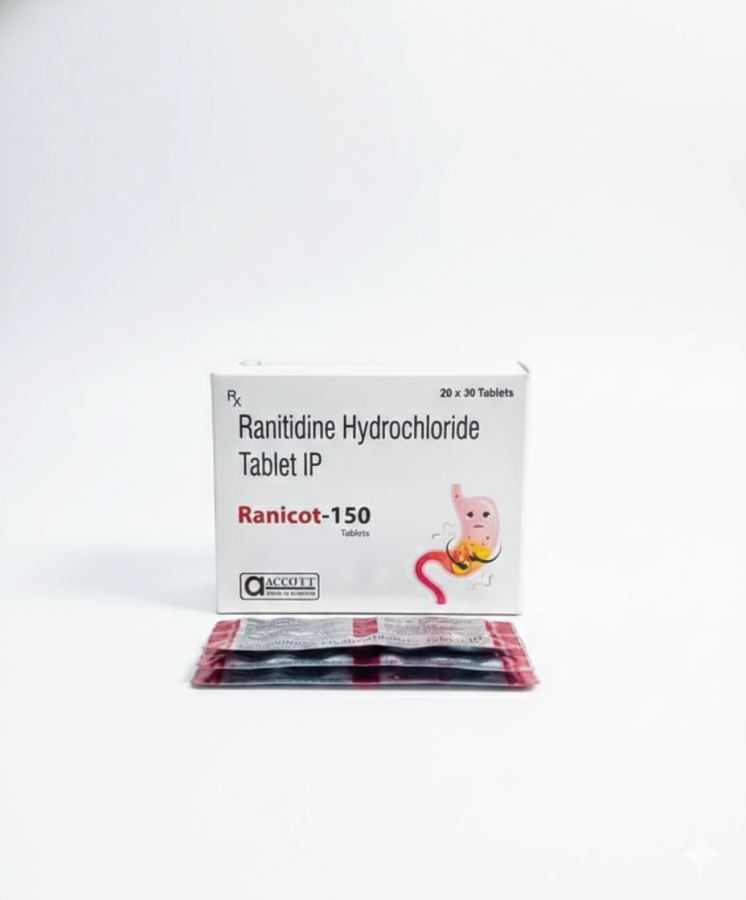
Hover to zoom · click to enlarge
| Composition | Ranitidine Hydrochloride Tablets IP. |
|---|---|
| Packing | 30*20ALU |
| SHELF LIFE | 24 MONTHS |
| HSN CODE | 3004 |
| Category | Tablets |
| Supply | Wholesale & Export |
RANICOT-150 Tablets
Active ingredient:
Ranitidine Hydrochloride IP, equivalent to Ranitidine 150 mg
In other words, a tablet providing 150 mg of ranitidine contains approximately 168 mg of ranitidine hydrochloride because the hydrochloride salt has a higher molecular weight. This relationship is documented in official ranitidine product information. (DailyMed)
Other ingredients:
The exact excipient formulation of RANICOT-150 specifically cannot be established from the front of the photograph. Excipients vary by manufacturer and formulation. Typical ranitidine 150-mg tablets may contain ingredients such as microcrystalline cellulose, croscarmellose sodium, magnesium stearate, hypromellose, titanium dioxide and coating agents. (DailyMed)
Ranitidine is a histamine H₂-receptor antagonist (H₂ blocker). It reduces the amount of acid produced by the stomach by blocking histamine stimulation of H₂ receptors on gastric acid-secreting cells. (DailyMed)
Ranitidine was historically used for acid-related gastrointestinal conditions such as:
Acid reflux / GERD
Heartburn
Peptic ulcers
Duodenal and gastric ulcers
Conditions involving excessive gastric acid secretion
There is an important distinction between this older ranitidine product and currently preferred acid-reducing medicines. Ranitidine products were withdrawn/restricted in many markets because of concerns about NDMA (N-nitrosodimethylamine) contamination, a potentially carcinogenic impurity. Therefore, don't start or continue an old RANICOT-150 strip simply because it is available at home; confirm with a doctor/pharmacist whether it is appropriate and whether an alternative such as famotidine or a proton-pump inhibitor is preferred.
In short:
RANICOT-150 = Ranitidine Hydrochloride IP equivalent to Ranitidine 150 mg per tablet.
If you want, I can also make a single table comparing all the medicines you've shown so far—RANICOT-150, RIFACOT-400, TERBICOT-250, TRYCOT-PLUS, UDN-300, XYLOCOT, HAIR-COT and CRANBEE—including composition, purpose, usual timing, major side effects and important interactions.