
Hover to zoom · click to enlarge
| Composition | Ceftazidime for Injection IP, |
|---|---|
| Packing | 1*1 |
| SHELF LIFE | 24 MONTHS |
| HSN CODE | 3004 |
| Category | Injections |
| Supply | Wholesale & Export |
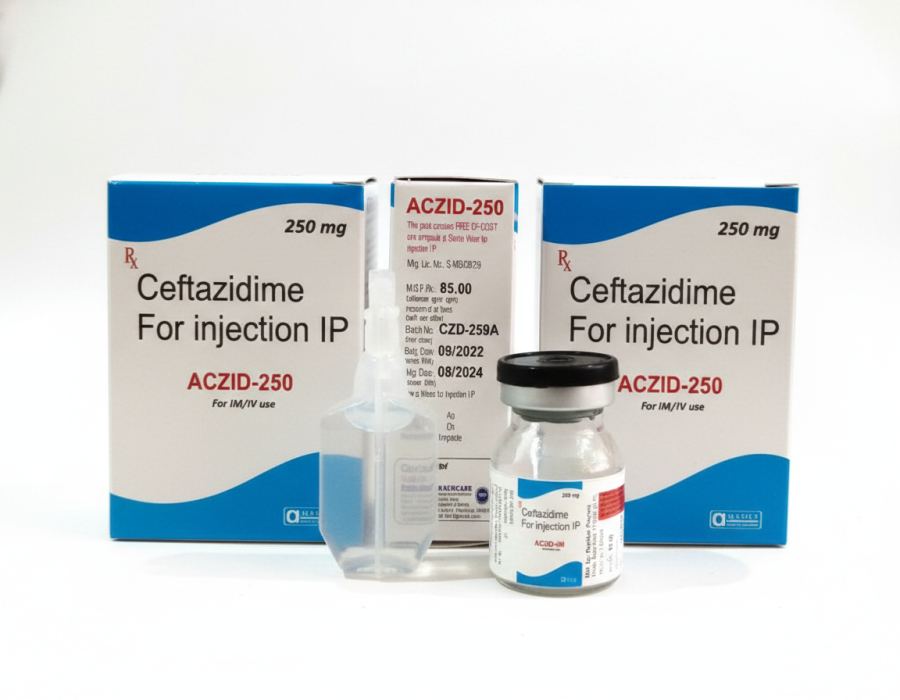
ACZID-250, an injectable ceftazidime antibiotic.
| Detail | Information |
|---|---|
| Brand | ACZID-250 |
| Generic medicine | Ceftazidime for Injection I.P. |
| Strength | 250 mg |
| Route | IM/IV use is printed on the box |
| Type | Prescription antibiotic |
| Form | Powder in a vial that must be prepared before administration |
| Packaging | The image shows the vial, two boxes, and a separate clear diluent/solvent container |
Ceftazidime is a third-generation cephalosporin antibiotic. It is particularly useful against certain Gram-negative bacteria, including Pseudomonas aeruginosa, when the organism is susceptible. DailyMed
Depending on the bacteria involved, ceftazidime can be used for infections such as:
The appropriate antibiotic depends on the suspected/identified organism and its susceptibility. DailyMed
250 mg is the amount of ceftazidime in the vial. It does not automatically mean that 250 mg is the correct dose for an adult.
For example, official prescribing information lists adult regimens ranging from 250 mg every 12 hours for uncomplicated UTI to 2 g every 8 hours for some severe infections. The dose depends on the infection, severity, age, and kidney function. DailyMed
Ceftazidime is eliminated primarily through the kidneys. When kidney function is reduced, the dose/frequency needs to be adjusted. Excessive drug accumulation in renal impairment can cause serious neurological effects, including seizures, encephalopathy, and coma. DailyMed
This becomes especially relevant when looking at the three injections you've shown so far:
The latter two—amikacin and ceftazidime—can both require particular attention to kidney function. Official information also notes increased concern for kidney toxicity when cephalosporins are administered with aminoglycosides such as amikacin, particularly with higher aminoglycoside doses or prolonged treatment. Pfizer Medical Information
Ceftazidime can cause:
If someone develops difficulty breathing, facial/throat swelling, severe rash, seizures, confusion, or severe/persistent diarrhea after receiving it, urgent medical evaluation is warranted.
The middle box appears to show manufacturing/expiry information, including a date that looks like 09/2022 and an expiry date that appears to be 08/2024. Because the image is not sufficient to establish whether this is the actual vial being used now, check the physical vial/box directly before administration. If the expiry really is August 2024, it should not be used now (September 2026).
If these three injections were prescribed together for one person, I can also explain why a doctor might use ceftriaxone+sulbactam + amikacin + ceftazidime, whether there is antibiotic overlap, and what questions/lab tests are important.