
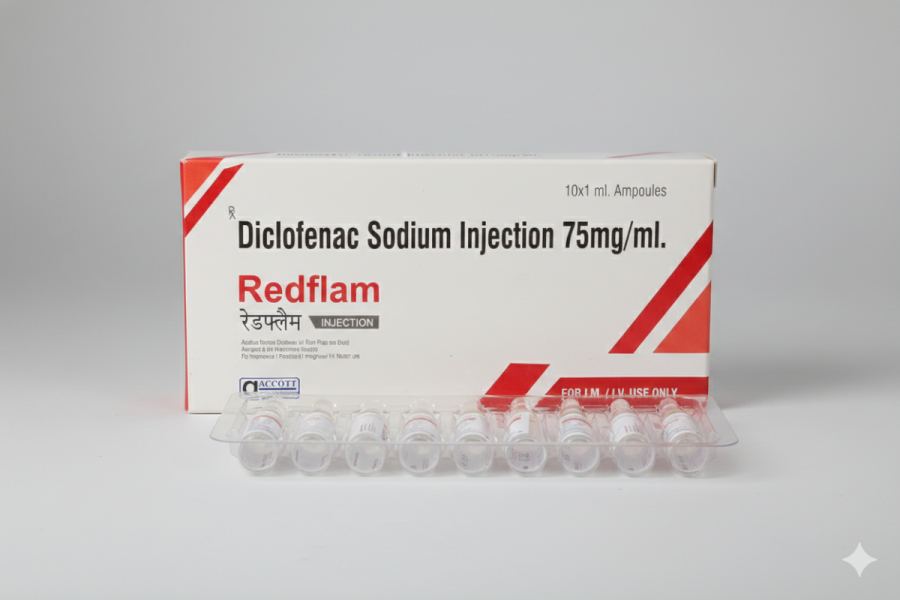
Hover to zoom · click to enlarge
| Composition | Diclofenac Sodium Injection 75 mg/mL |
|---|---|
| Packing | 1ML |
| SHELF LIFE | 24 MONTHS |
| HSN CODE | 3004 |
| Category | Injections |
| Supply | Wholesale & Export |
Redflam Injection
Diclofenac is a non-steroidal anti-inflammatory drug (NSAID) with pain-relieving and anti-inflammatory effects. Injectable diclofenac is used for short-term treatment of significant acute pain, including postoperative pain, renal colic, acute musculoskeletal pain and other painful inflammatory conditions. Drugs.com
Diclofenac inhibits COX enzymes, which reduces production of prostaglandins.
Prostaglandins contribute to:
So, in simple terms:
Diclofenac → ↓ prostaglandins → ↓ inflammation + ↓ pain
It is therefore quite different from the Trancot (tranexamic acid) injection you showed previously.
The photograph shows 75 mg/mL, so:
1 ampoule = 1 mL = 75 mg diclofenac
That is important because some other diclofenac injection products are supplied as 75 mg/3 mL, whereas this product is labeled 75 mg/1 mL. The concentration is therefore different even though the total drug amount in an ampoule can be the same.
For injectable diclofenac, dosing and route depend on the specific formulation and clinical situation. Some formulations are intended for deep IM administration, while others have specific IV instructions. It should therefore be administered according to the product's prescribing instructions by a healthcare professional. Medicines.org.uk
Diclofenac is not simply a stronger version of paracetamol. NSAIDs can cause significant adverse effects, particularly with repeated use.
Diclofenac can cause:
These complications can occur even without obvious warning symptoms. The risk is higher in people with a history of ulcers/GI bleeding and with certain other medicines. Drugs.com
Diclofenac can reduce kidney blood flow and may cause or worsen kidney dysfunction, particularly in people who are:
Adequate hydration and appropriate patient selection are important when injectable diclofenac is used. FDA Access Data
NSAIDs including diclofenac can increase the risk of serious cardiovascular events such as heart attack and stroke, with risk influenced by the patient's underlying cardiovascular risk and duration of treatment. Drugs.com
People who have previously developed asthma, hives, swelling or other allergic reactions after aspirin or other NSAIDs may be at particular risk with diclofenac. Serious allergic reactions can occur. FDA Access Data
Injectable diclofenac can cause local injection-site reactions. For IM formulations, proper injection technique is important because improper administration can damage tissue or nerves. Greenbook
Diclofenac should not simply be combined with another NSAID such as:
because this can increase adverse effects without providing a useful additional benefit. Taj Pharma
Doctors also need to consider medicines such as blood thinners, antiplatelet drugs, corticosteroids and some antidepressants, because combinations can increase bleeding or GI risk. Taj Pharma
These two injections have very different purposes:
| Redflam | Trancot | |
|---|---|---|
| Active ingredient | Diclofenac sodium | Tranexamic acid |
| Drug class | NSAID | Antifibrinolytic |
| Main action | Reduces pain/inflammation | Helps stabilize blood clots |
| Typical purpose | Acute pain/inflammation | Certain types of bleeding |
| Strength shown | 75 mg/mL | 500 mg/5 mL |
| Route on package | IM/IV | IV only |
| Self-injection? | No | No |
Because you have now shown Trancot and Redflam, if these were prescribed together for the same episode, the reason they were prescribed together matters. Diclofenac can increase gastrointestinal bleeding risk, while tranexamic acid is being used to reduce bleeding in appropriate situations. That combination should therefore be based on the treating clinician's assessment rather than being self-administered.
If you show me the complete prescription containing Trancot + Redflam and the other medicines, I can go through the prescription medicine-by-medicine and explain what the doctor appears to be treating, the purpose of each drug, and the important interactions/precautions.