Hover to zoom · click to enlarge
| Composition | Ketoconazole, Clobetasol Propionate, Neomycin, Tolnaftate, Iodochlorhydroxyquinoline & Dexpanthenol Cream. |
|---|---|
| Packing | 15GM |
| SHELF LIFE | 24 MONTHS |
| HSN CODE | 3004 |
| Category | Ointments & Creams |
| Supply | Wholesale & Export |
DERMA-K6 CREAM
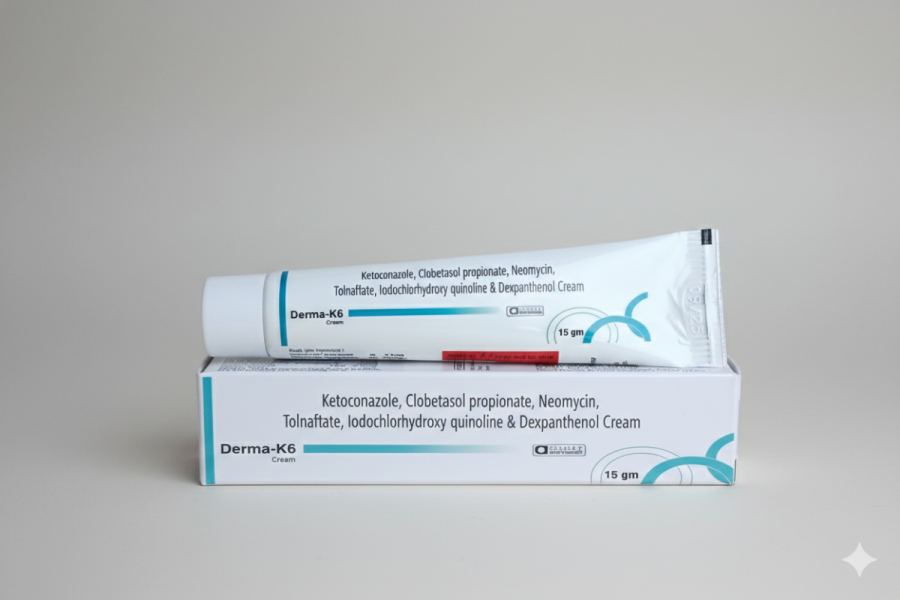
Derma-K6 Cream, a 15 g combination skin cream. The label lists six active ingredients:
Ketoconazole, Clobetasol propionate, Neomycin, Tolnaftate, Iodochlorhydroxy quinoline & Dexpanthenol
The exact strengths of the individual ingredients are not legible in this photograph, so I would not assume their concentrations.
| Ingredient | Category | Role |
|---|---|---|
| Ketoconazole | Antifungal | Treats susceptible fungal/yeast infections |
| Tolnaftate | Antifungal | Acts against certain dermatophyte fungi |
| Clobetasol propionate | Very potent corticosteroid | Reduces redness, swelling and itching |
| Neomycin | Antibiotic | Treats certain susceptible bacterial infections |
| Iodochlorhydroxyquinoline | Antimicrobial | Has antibacterial/antifungal activity |
| Dexpanthenol | Skin-conditioning/healing agent | Helps support skin barrier and healing |
Ketoconazole itself is an established topical antifungal used for conditions including tinea/ringworm, jock itch, athlete's foot and certain yeast-related skin conditions. DailyMed
The ingredient that deserves the most attention is clobetasol propionate.
Clobetasol is a high-potency topical steroid. It can make an inflamed rash become less red and itchy very quickly, but that doesn't necessarily mean the underlying infection has been eliminated.
For suspected fungal infections, current dermatology guidance generally recommends avoiding antifungal–corticosteroid combination products, particularly because the steroid can complicate treatment and prolonged steroid exposure can cause skin problems. A plain topical antifungal is generally preferred when appropriate. AAFP
Imagine a fungal rash:
Fungus → redness + itching → cream containing clobetasol → redness/itching decrease
It can look much better even though the fungus may still be present. Continued steroid use can alter the appearance of the infection and make it harder to recognize and treat.
That's why I would not recommend using Derma-K6 routinely or for an extended period for a suspected fungal infection unless a clinician specifically prescribed it for that purpose.
You have now shown three products:
| Product | Main antifungal | Steroid? | Antibiotic? |
|---|---|---|---|
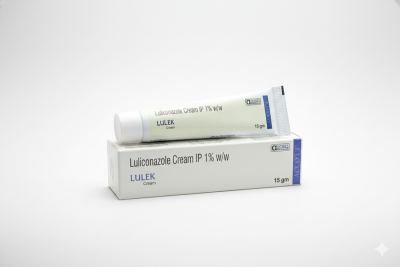
| Lulek | Luliconazole | ❌ No | ❌ No |
| ITRAFOTT-PLUS | Itraconazole | Clobetasol | Ofloxacin + ornidazole |
| Derma-K6 | Ketoconazole + tolnaftate | Clobetasol | Neomycin + other antimicrobial |
So Lulek is fundamentally different from the other two: it is a straightforward topical antifungal, whereas the latter two are multi-drug combination creams containing clobetasol.
If these three were prescribed for the same skin problem, I would want to know the diagnosis and the doctor's instructions before assuming they should all be applied. In particular, don't automatically layer all three creams on the same rash.
If you show me the prescription/photo of the doctor's instructions (or tell me where the rash is and how long you've had it), I can explain exactly what each of these three medicines is likely intended to do and how their uses differ.