
Hover to zoom · click to enlarge
| Composition | minimalist product composition |
|---|---|
| Packing | 5GM |
| SHELF LIFE | 24 MONTHS |
| HSN CODE | 3004 |
| Category | Ointments & Creams |
| Supply | Wholesale & Export |
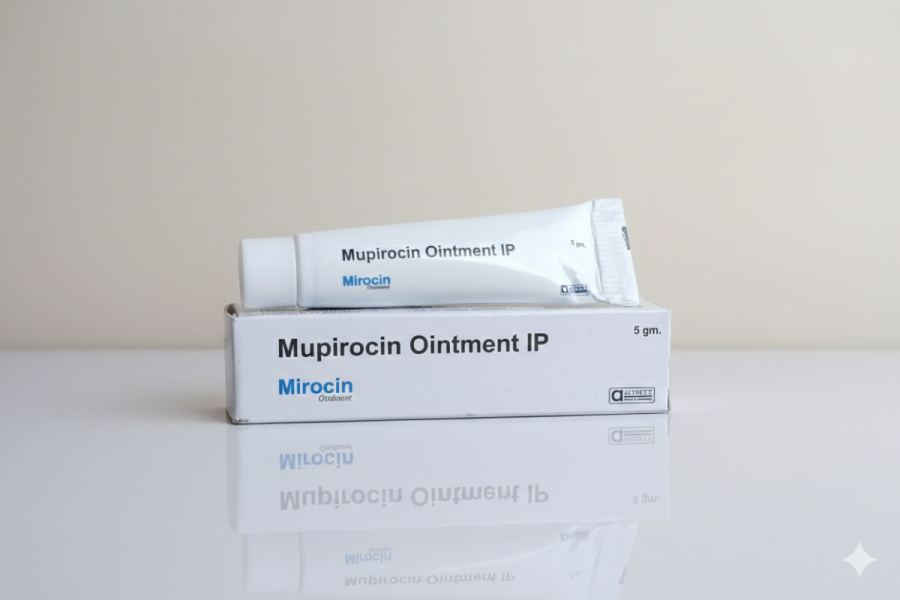
Mirocin Ointment
Mupirocin is an antibiotic that acts mainly against susceptible Gram-positive bacteria, particularly Staphylococcus aureus and Streptococcus species.
It inhibits bacterial protein production, thereby preventing susceptible bacteria from growing.
It may be prescribed for superficial bacterial skin infections such as:
It does not treat fungal infections such as ringworm or candidiasis and does not treat viral infections such as herpes.
This distinction is important:
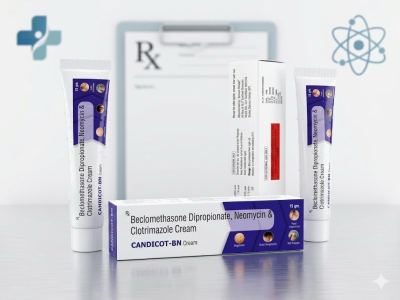
Mirocin is therefore a single antibiotic, whereas CANDICOT-BN is a combination product.
A small amount is usually applied as a thin layer to the affected skin, according to the prescription/product instructions.
Important precautions:
The most common effects are local:
A new or worsening rash can occasionally indicate contact allergy. Stop and seek medical advice if there is significant swelling, blistering, severe irritation, or an allergic reaction.
The photograph clearly shows “Mupirocin Ointment IP” and 5 g, but the percentage strength is not clearly visible on the front of this package. Mupirocin ointment is commonly supplied as 2%, but I would not treat that as confirmed for this particular tube without seeing its composition panel.
Because mupirocin is an antibiotic, it shouldn't routinely be used on every rash, pimple, wound, or itchy area. Using an antibiotic when the problem is fungal, viral, allergic, or noninfectious won't address the underlying cause and unnecessary antibiotic exposure can contribute to resistance.
In short: Mirocin (mupirocin) = topical antibiotic for susceptible bacterial skin infections. It is fundamentally different from the antacids, antifungal/steroid cream, and pain gels you've shown earlier.
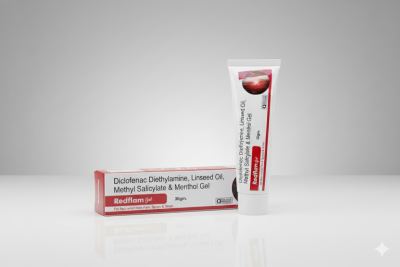
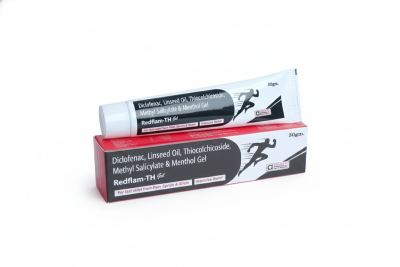
Diclofenac Linseed Oil Thiocolchicoside Methyl Salicylate Menthol
30GM