
Hover to zoom · click to enlarge
| Composition | Azithromycin Suspension IP |
|---|---|
| Packing | 10*6 BLISTER |
| SHELF LIFE | 24 MONTHS |
| HSN CODE | 3004 |
| Category | Tablets |
| Supply | Wholesale & Export |
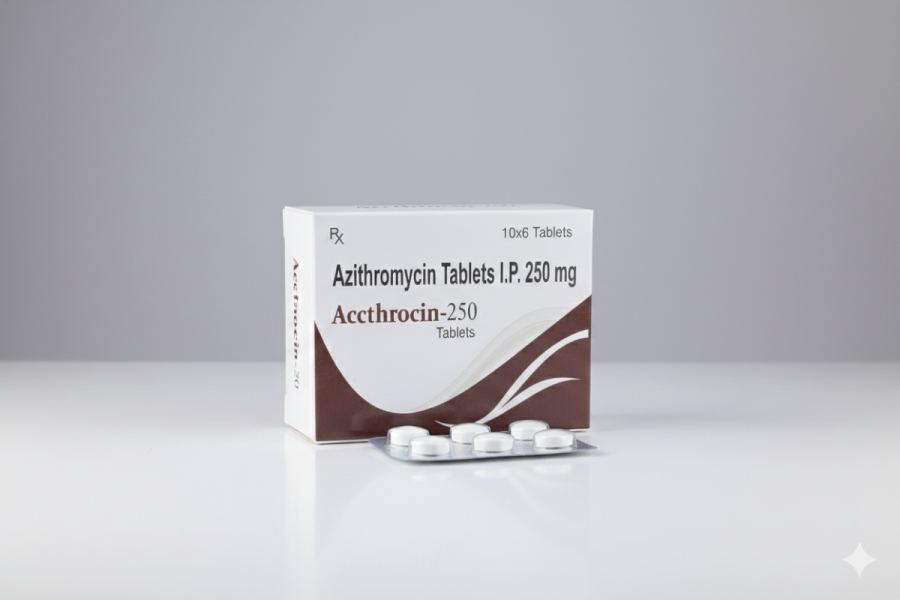
ACCTHROCIN-250
Brand: Acctthrocin-250
Active ingredient: Azithromycin
Strength: 250 mg per tablet
Form: Tablets I.P.
Pack size: 10 × 6 tablets = 60 tablets
Rx: Prescription medicine
Azithromycin is a macrolide antibiotic. It works against certain bacteria by interfering with their ability to make proteins needed for growth.
It may be prescribed for certain:
Throat and tonsil bacterial infections
Ear infections
Sinus infections
Chest/respiratory bacterial infections
Skin and soft-tissue infections
Certain sexually transmitted bacterial infections
It does not treat viral infections such as most common colds or influenza.
The previous image was Acctthrocin-500 (azithromycin 500 mg).
This one is Acctthrocin-250 (azithromycin 250 mg).
So they contain the same antibiotic, but the amount per tablet is different:
Do not substitute two 250-mg tablets for one 500-mg tablet, or vice versa, unless your doctor/pharmacist has specifically instructed you to do so. The appropriate dose and duration depend on the infection.
The exact regimen varies considerably. Depending on the infection, a doctor may prescribe azithromycin once daily for several days or use another regimen.
Take it exactly as prescribed and complete the prescribed course unless your doctor tells you to stop.
If you miss a dose, don't automatically double the next dose.
Nausea
Diarrhea
Abdominal/stomach discomfort
Vomiting
Headache
Azithromycin can rarely cause heart-rhythm abnormalities, particularly in people who already have certain heart conditions or take other medicines that prolong the QT interval.
Contact a doctor promptly if you develop:
Fainting or significant palpitations
Severe or persistent diarrhea
Yellowing of the eyes/skin or dark urine
Severe rash or swelling
Difficulty breathing
You've now shown both azithromycin 500 mg and azithromycin 250 mg. They should generally not be taken together unless the prescribing doctor specifically designed the regimen that way. They are the same antibiotic at different strengths.
If these medicines were all given to you for the same illness, send me a photo of the prescription (or tell me exactly what the doctor wrote beside each medicine). I can explain the complete regimen and why each of the medicines may have been prescribed.